Applied Behavior Analysis (ABA) therapy is a structured method that improves social skills in children with autism. Using evidence‑based techniques, ABA modifies behavior through reinforcement to strengthen social interaction and communication. Many parents and caregivers look for reliable ways to help their children learn essential social skills, which support development and participation. This article explains the basics of ABA therapy, outlines common techniques and research‑backed outcomes, and shows how parents can support practice at home.
A broad review found strong empirical support for multiple treatments addressing social deficits in individuals with autism.
Evidence Synthesis: Social Skills Interventions for Autism
This paper offers a best‑evidence synthesis of interventions to increase social behavior for individuals with autism. It reviewed 66 peer‑reviewed studies published between 2001 and July 2008, covering 513 participants. Results are reported by the age of the person receiving intervention and by the delivery agent. The authors conclude there is substantial empirical support for many treatments targeting social deficits. Applying the evidence‑based practice criteria from Reichow et al. (Journal of Autism and Developmental Disorders, 38:1311–1318, 2008), social skills groups meet the criteria for established EBP and video modeling is classed as promising EBP. The paper includes recommendations for practice and suggestions for future research.
Social skills interventions for individuals with autism: Evaluation for evidence-based practices within a best evidence synthesis framework, FR Volkmar, 2010
ABA is a scientifically validated approach that uses behavioral principles to teach new skills and reduce challenging behaviors in individuals with autism. By breaking complex social skills into small steps, ABA enables focused teaching that can produce measurable gains in social interaction. Its structured format delivers consistent reinforcement, which helps children learn and generalize skills across settings.
Applied Behavior Analysis (ABA) is grounded in behaviorist principles and focuses on observable behaviors and the environmental factors that shape them. In autism support, ABA provides tailored interventions to match each child's needs. Techniques like positive reinforcement, prompting, and modeling encourage desired behaviors and reduce maladaptive ones. Research shows ABA can lead to meaningful improvements in communication, social skills, and daily living activities for children with autism.
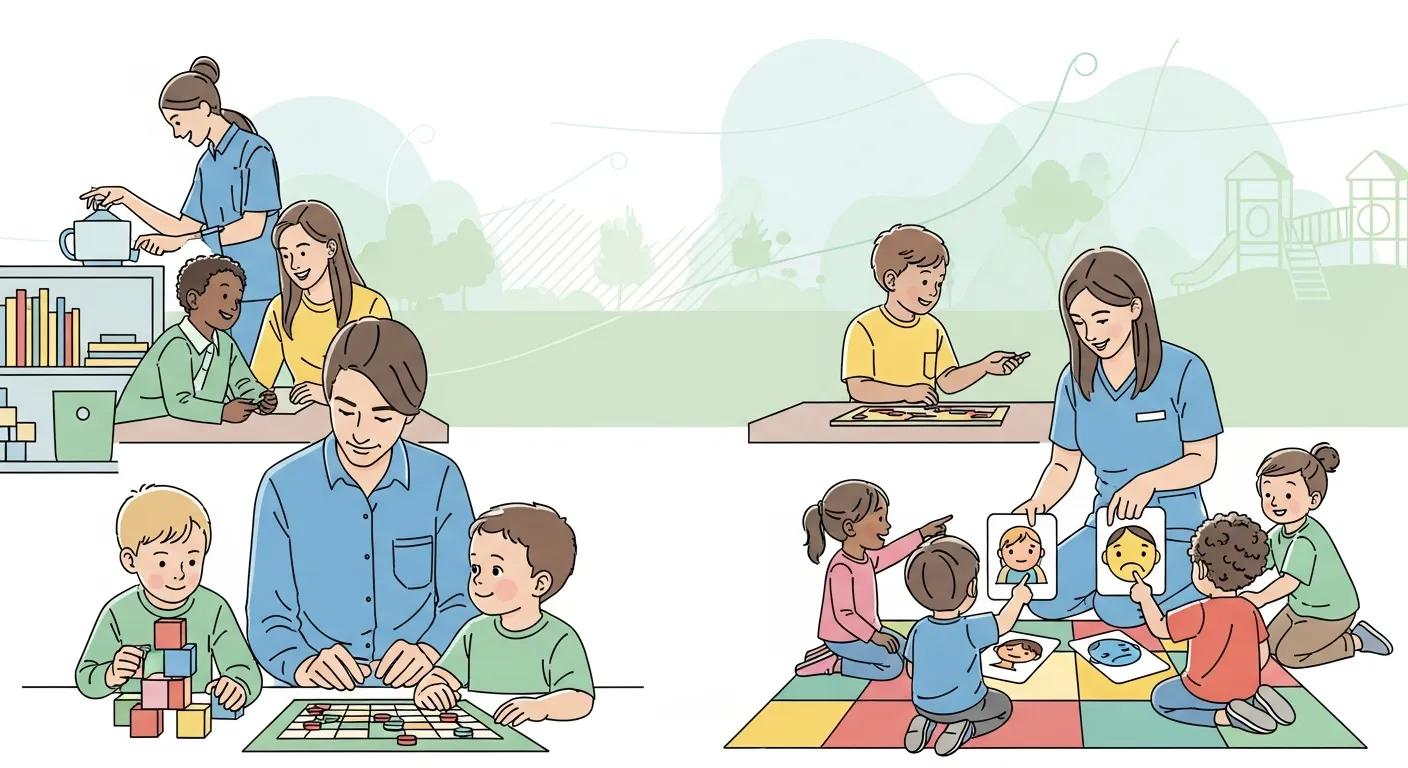
ABA uses several strategies to build social skills. Social stories teach children how to understand situations and choose appropriate responses. Role‑playing and guided peer interactions give children safe, real‑life practice. These tailored methods improve skills and boost confidence, helping children engage more effectively with peers and adults.
Several ABA techniques effectively teach social skills by creating engaging, supportive learning conditions that speed skill acquisition.
Discrete Trial Training (DTT) breaks skills into small, teachable steps. Each step follows a clear routine of instruction, prompting, and reinforcement. Repetition and immediate feedback help children improve communication; studies link DTT to gains in expressive and receptive language that support social interaction.
Natural Environment Teaching (NET) focuses on learning in everyday contexts so children practise social skills where they naturally occur. NET promotes spontaneous communication during routines at home or in the community, which helps children generalize skills across situations and improves real‑world social interactions.
Research documents ABA's positive effects on social skills in children with autism. Studies report improvements in social communication and interaction following ABA interventions.
Recent studies show children who receive ABA make notable gains in social communication compared with those who do not. For example, research reports that a substantial portion of children who undergo ABA display increased social engagement and improved communication. These findings highlight the value of early intervention and ABA's role in social development.
Additional studies support the effectiveness of targeted interventions for social communication deficits in children with ASD.
Evidence-Based Social Communication Interventions for Children with ASD
Impairments in social communication skills are a core feature of autism spectrum disorder (ASD). These include deficits in social‑emotional reciprocity, non‑verbal communicative behaviors used for social interaction, and difficulties developing, maintaining, and understanding relationships. To improve outcomes for children with ASD, much research has focused on developing effective interventions to treat these social communication deficits. This paper summarises the evidence‑based practices found in the intervention literature and provides an overview of those strategies.
Evidence-based social communication interventions for children with autism spectrum disorder, 2017
Numerous case studies show ABA can transform social interaction for children with autism. For example, one report described a child who, after several months of ABA, began initiating conversations with peers and joining group activities. These changes improve the child's social skills and support their quality of life and emotional well‑being.
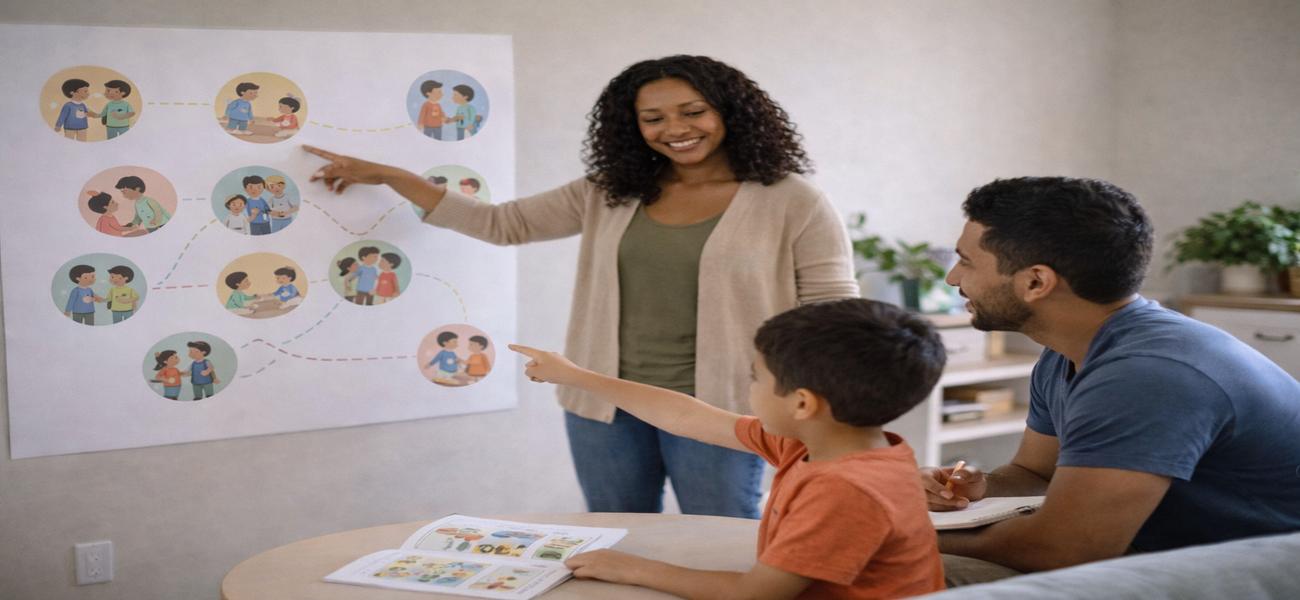
Parents and caregivers are central to reinforcing the social skills learned in ABA. By creating supportive routines at home, they help children practise and generalize those skills.
To help at home, parents can use practical strategies such as:
Used consistently, these strategies boost ABA's effectiveness by giving children more chances to practise skills in a familiar setting.
Building a compassionate, individualized support environment matters for social skill growth. Parents should learn their child's unique needs and adapt their approach. Collaborating with therapists ensures consistency between home and therapy. Involving siblings and peers in social activities can build community support and further social progress.
Following clinical best practices helps achieve the best outcomes in social skills development. These methods combine targeted behavioral interventions with respect and compassion.
Adding empathy to ABA means seeing situations from the child's perspective and responding with care. This builds trust and a positive therapeutic relationship, which supports learning. Prioritizing the child's emotional well‑being helps create a safe space for growth.
Clinicians can enhance social skills training outcomes by following specific guidelines:
By following these guidelines, clinicians can maximize ABA's impact on social skills development for children with autism.
Our friendly team is here to help!
Book a call with one of our Clinical Directors today!