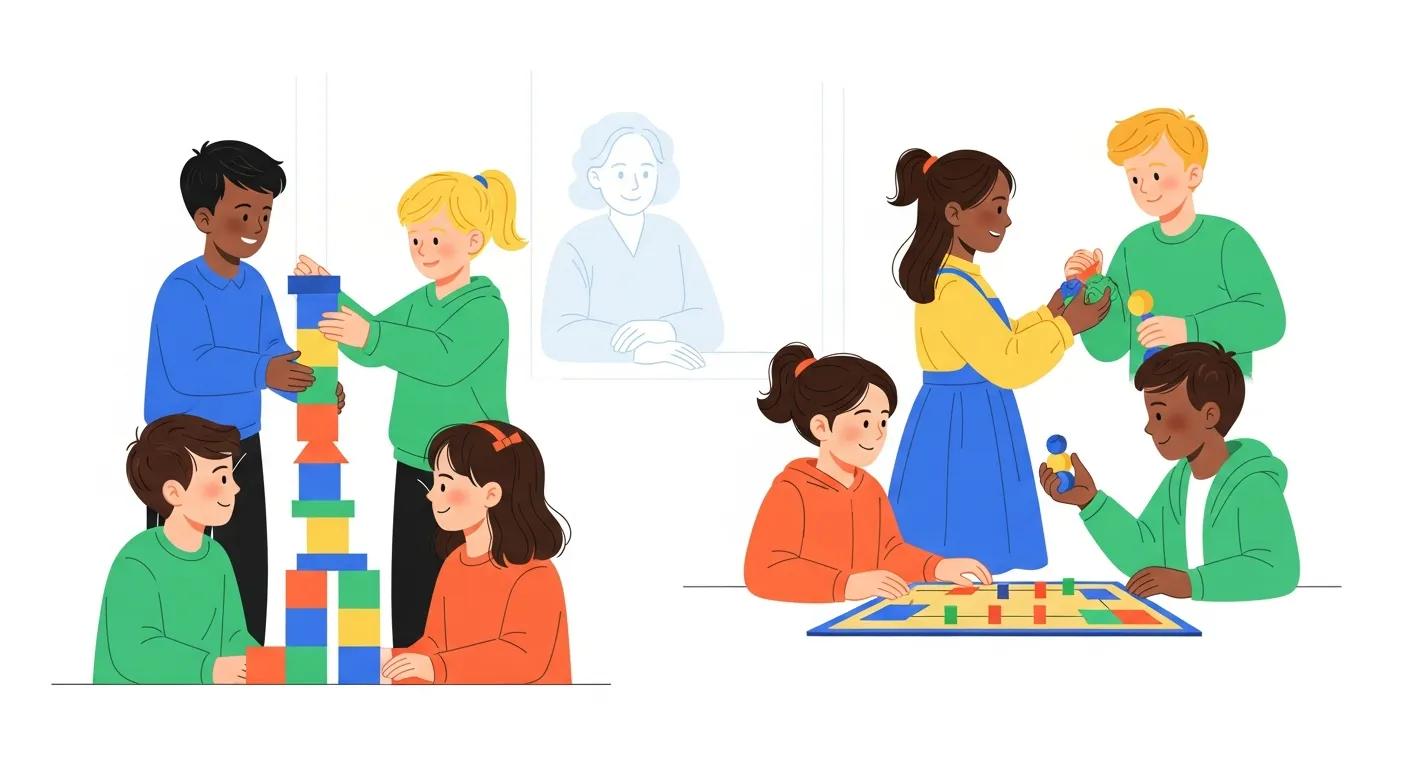
Applied Behavior Analysis (ABA) helps children—especially those on the autism spectrum—build stronger social skills. It uses a systematic reinforcement approach to change behaviour and improve communication and interaction. Social difficulties can limit development and quality of life; ABA provides structured, targeted support to address those gaps. Below, we cover the basics of ABA therapy, common social challenges in autism, effective ABA techniques, the role of families, and how progress is tracked.
ABA is an evidence-based approach that targets specific behaviours using reinforcement. By breaking complex skills into manageable steps, it helps children with autism learn social behaviours more effectively. Early intervention is important for better developmental outcomes. Across settings, ABA techniques support improved communication and more positive peer interactions.
Research consistently shows ABA supports social and emotional growth in children with autism.
ABA Therapy's Impact on Social & Emotional Skills in Autistic Children
This study examines how Applied Behavior Analysis (ABA) can improve emotional and social skills in children with autism spectrum disorder. It describes ABA as a well-established approach that uses behavior modification to encourage positive behaviours and reduce challenging ones. The study found that an applied behavior analysis programme produced significant gains in social, communicative, and daily living skills among institutionalised children with ASD.
The effectiveness of applied behavior analysis program training on enhancing autistic children's emotional-social skills, 2024
ABA is based on behaviourist principles: behaviour is learned and can be changed through reinforcement. Common techniques include discrete trial training, natural environment teaching, and social skills programmes. Family involvement is key—parents and caregivers learn to reinforce skills at home to keep progress consistent across environments.
ABA strengthens communication with targeted interventions such as modelling and prompting. Structured play and practice teach children to initiate conversations and respond to social cues. Over time, these skills support better peer relationships and greater confidence in social settings.
Studies highlight ABA's strong effects on speech and communication—core skills for social interaction.
ABA Therapy for Speech & Communication in Autistic Children
This article reviews theoretical and practical uses of ABA in speech development for children with autism spectrum disorder. It analyses causes of speech delay, teaching principles from behavior analysis, and the role of positive reinforcement. The article offers practical examples of how ABA can help children increase vocabulary, develop communication skills, and respond to social cues. Results indicate ABA can reduce speech development deficits, boost communicative competence, and aid social integration for autistic children.
THE USE OF ABA THERAPY FOR SPEECH FORMATION IN CHILDREN WITH AUTISTIC SPECTRUM DISORDERS, 2026
Children with autism often face social challenges that make it harder to interact effectively. These can include trouble reading social cues, starting conversations, and building friendships. Identifying these barriers is essential to tailor effective interventions.
Social communication challenges are common in ASD. Many children struggle to read nonverbal cues like facial expressions and body language. Starting and maintaining conversations can be difficult, which may lead to isolation and frustration. Recognising these issues is the first step toward targeted social skills training.
Family-involved, evidence-based interventions have shown promise in improving social communication for young children with ASD.
Evidence-Based ABA Interventions for Social Communication in Young Children with ASD
Social communication deficits are a core feature of autism spectrum disorder. This paper reviews 54 studies of social communication interventions delivered by parents and siblings to children with ASD under six years old. Parent-implemented packages, Pivotal Response Treatment (PRT), Early Start Denver Model (ESDM), and Joint Attention, Symbolic Play, Engagement & Regulation (JASPER) met criteria as established evidence-based practices for this group. Most studies reported successful generalisation of skills for some, but not all, children.
A systematic review of family-mediated social communication interventions for young children with autism, J Holloway, 2022
Behavioural barriers can also block social development. Children with autism may show anxiety, withdrawal, or aggressive responses in social situations, which complicates interaction. ABA helps identify these behaviours and teaches strategies to reduce them, creating more positive social experiences.
Several ABA techniques have proven helpful for social skill development. Interventions are tailored to each child so they stay relevant and effective.
Key ABA methods include discrete trial training, which breaks skills into small teachable parts, and natural environment training, which teaches skills in real-life settings. These approaches let children practise social behaviours with positive reinforcement. Individualised plans match each child's strengths and challenges.
ABA uses exercises like role-play to practise initiating conversations and responding to cues. Group activities encourage teamwork and cooperation, helping children build social skills in an engaging way. Practising these exercises at home reinforces what they learn in therapy.
Parents and caregivers are essential to ABA's success. Their involvement increases the therapy's effectiveness and gives children consistent places to practise new skills.
Parent training gives caregivers practical tools to reinforce skills at home. Programs commonly include workshops and resources that explain ABA principles and techniques so parents can apply them consistently across settings.
Families often find ABA complex. Compassionate guidance helps them understand the process and feel empowered in their role. Support networks and community resources offer practical help and encouragement throughout the journey.
Measuring progress is key to evaluating interventions and making adjustments. Teams use multiple methods to monitor social skills and overall behaviour over time.
Progress is measured through direct observation and standardised assessments of social communication. These tools identify specific areas of improvement and guide ongoing planning. Parent feedback adds valuable context about behaviour across different environments.
Research shows ABA can lead to meaningful improvements in social skills. Evidence especially supports early intervention, but outcomes vary by the child's needs and the quality of the programme; broad claims like a "98% improvement" are not consistently supported. Overall, studies reinforce ABA's role in producing positive outcomes.
Clinicians emphasise the value of individualised treatment plans. Tailored interventions make therapy more effective and engaging for each child.
Experts recommend that ABA be delivered by trained professionals who understand autism and behaviour analysis. Ongoing training and close collaboration with families help maintain high standards of care. Using evidence-based techniques keeps therapy aligned with current research.
Case studies show ABA's potential to improve social skills. They demonstrate how focused interventions help children form relationships and enhance their overall quality o
Our friendly team is here to help!
Book a call with one of our Clinical Directors today!