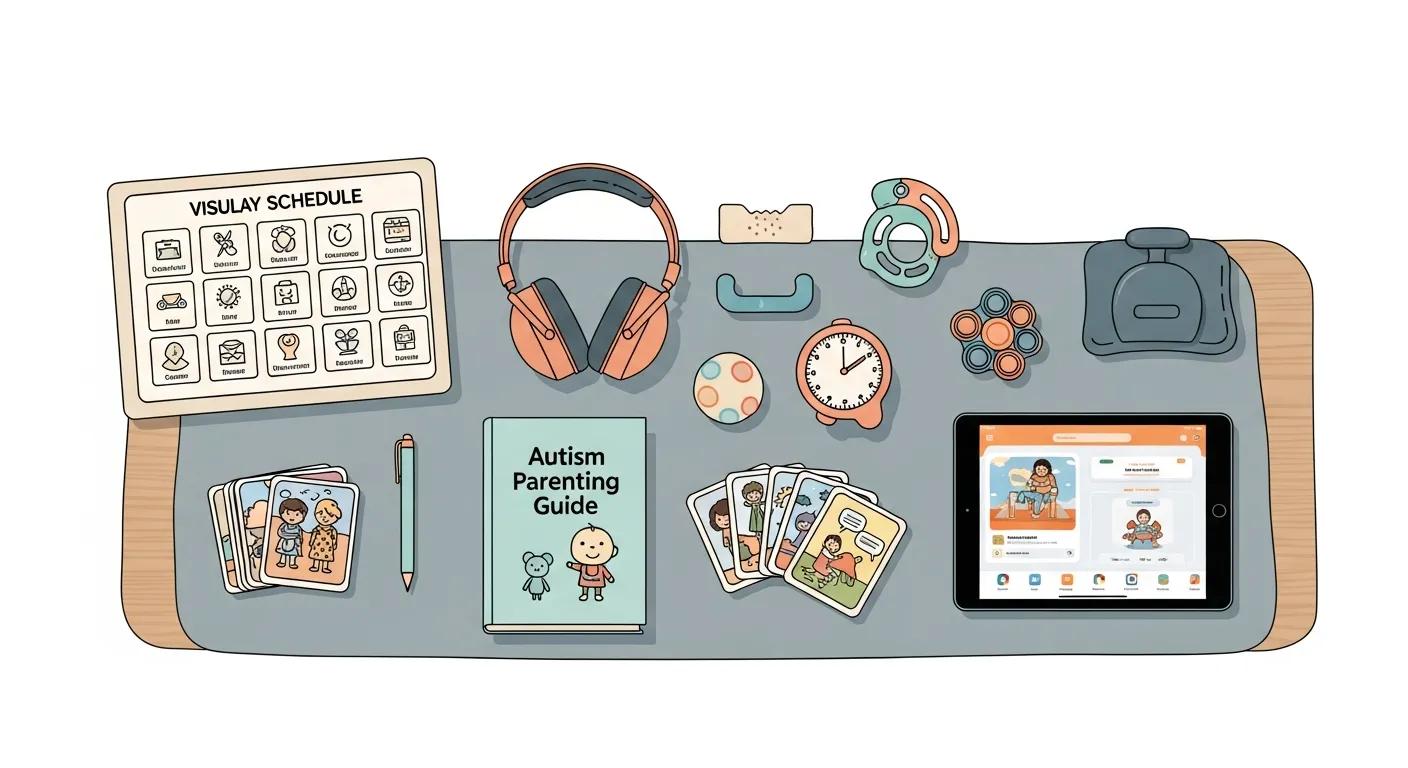
Raising a child with autism brings specific challenges that respond best to targeted strategies and tools. Knowing which supports to use helps parents offer consistent care and build a calm, structured home. This article covers practical resources—ABA therapy tools, sensory-integration aids, communication supports, and parent training—to address common issues and promote your child's development and well‑being. We will delve into key autism parenting strategies, effective ABA therapy tools, sensory tools for emotional regulation, communication aids for nonverbal children, and training resources for parents.
Effective support starts with early intervention, parent training, and using ABA approaches at home. These steps boost a child's development and give parents clear skills for managing everyday challenges.
Research underscores the vital role of parent training in implementing ABA successfully.
Parent Training for ABA Interventions in Autism
Parent-implemented interventions based on Applied Behavior Analysis (ABA) have become a crucial component in supporting children with autism spectrum disorder (ASD). When parents are involved, therapy stays more consistent across settings and skills are more likely to generalise. Parental participation is linked to improved developmental and behavioural outcomes, but the best training methods need focused attention. This literature review examines current training approaches for teaching parents ABA techniques, highlighting behaviour skills training (BST) and video modelling (VM).
Improving Training Modalities for Parent-Implemented ABA Interventions, 2025
ABA delivers personalised interventions that target communication, social interaction, and adaptive skills. Structured techniques address each child's needs. Research shows ABA can produce meaningful gains in areas such as academic performance and social skills, making it a core tool in autism support.
Parents can use several behavioral management tools to meet common autism challenges. These include visual supports, reinforcement methods, and progress tracking.
Together, these tools help parents build a predictable, supportive environment that promotes a child's growth.
Proven ABA tools for home use include parent training programs, practical ABA strategies, and community support resources that offer guidance and troubleshooting.
Assistive technology can strengthen ABA work at home. Common options include:
Using these tools in everyday routines makes ABA strategies more consistent and effective.
You can put ABA into practice at home with simple methods and tools. Try:
These straightforward approaches help parents apply ABA techniques during everyday interactions.
Sensory tools help children manage overload and find calm. The right sensory input can reduce distress and make challenging situations more manageable.
Studies continue to examine how sensory integration therapy addresses emotional regulation and socialization challenges for children with autism.
Sensory Integration Therapy for Emotional Regulation in Autism
Children with autism commonly experience challenges in socialization and emotional regulation, which may hinder their engagement in therapeutic and educational activities. This study aimed to explore socialization barriers, emotional regulation processes, therapist intervention strategies, and parental involvement in the context of Sensory Integration therapy for children with autism at Bundaku Autism Clinic Center.
Socialization and Emotional Regulation Challenges in Children with Autism during Sensory Integration Therapy, 2026
Several sensory tools can help children manage sensory input and emotions, including:
These items can be effective aids for helping children regulate sensations and emotions.
Choose tools that match your child's needs and preferences. Effective practices include:
Thoughtful integration of sensory tools supports emotional regulation and overall well‑being.
Communication aids give nonverbal children ways to express needs, choices, and feelings. They expand how children take part in family and school life.
Effective options include several devices and systems, such as:
These supports enable nonverbal children to communicate and engage more fully with their environment.
Make communication aids part of everyday life to increase their usefulness. Parents can:
Embedding communication aids into routine supports steady progress in a child's communication skills.
Accessing training and support is essential when managing autism care. Many organisations and programs provide practical guidance and assistance.
Effective parent training focuses on practical skills parents can use daily. Common formats include:
These resources help parents build confidence and support better outcomes for their children.
Trusted sources offering tools and guidance include:
These organisations can be helpful partners on the journey of parenting a child with autism, offering practical tools and support.
If you need help or have questions, please contact us.
Our friendly team is here to help!
Book a call with one of our Clinical Directors today!